
50 years of the Lausanne Movement
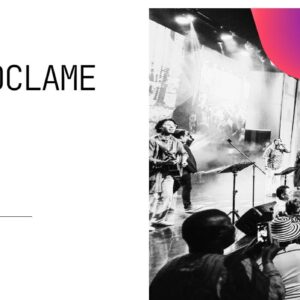
More than 5,000 evangelicals representing 202 nations gathered for the fourth Lausanne Movement Congress in Seoul, Korea, during the last week of September. Others participated online. Their goal: that together the Church would proclaim and highlight Christ.
The Lausanne Movement and Care for Creation
The influence of two Latin American theologians has been crucial to the adoption of the concept of integral mission in evangelical Christian thinking. Present at the first congress (see the history of the Lausanne Movement below), René Padilla and Samuel Escobar emphatically reminded attendees that the Gospel has consequences in all areas of society. “Evangelism and socio-political engagement are both part of our Christian duty.”
It was not until the 2010 congress in Cape Town, South Africa, that the responsibility of Christians in relation to environmental issues was addressed directly. The Cape Town Commitment, a key document of the third congress, states :
“We cannot separate our relationship with Christ from the way we treat the earth. Indeed, to proclaim what the Gospel says, ‘Jesus is Lord,’ is to proclaim the Gospel that includes the earth, since Christ’s lordship extends over all creation. Care for creation is thus an aspect of the Gospel that falls within the scope of Christ’s lordship.”
The same document describes integral mission as “discerning, proclaiming, and living out the biblical truth that the Gospel is God’s good news, announced through the cross and resurrection of Jesus Christ, for individuals, for society, and for creation.”
A working group, bringing together members of the Lausanne Movement and the World Evangelical Alliance committed to the protection of creation, was formed following a gathering in Jamaica in 2012. This group drafted and published the Jamaica Call to Action, calling for action by the global church in response to the “pressing crisis that must be urgently addressed by our generation.”
Video of the Lausanne Conference gathering on caring for creation at Les Courmettes in 2017 – French subtitles available in settings.
Lausanne 4, Seoul 2024
In preparation for the fourth congress, a study on the current state of mission in the world was initiated in 2019. Following a process of listening to and sharing with more than 150 global mission experts, the State of the Missionary Mandate report presents the greatest gaps and opportunities for fulfilling the Mission Mandate. The report consists of three parts: current status, contextual changes, and regional considerations.
The assessment of environmental protection is part of the studies on changes in context, raising the question, “What is sustainable?” The authors echo the language of the mission mandate to make disciples of all nations: “We are called to make disciples who live out the truth that Jesus is Lord of all creation. Without this, we risk ineffective evangelism by failing to address today’s deepest questions.”
Environmental protection and climate justice are among the six themes identified as most relevant to the European context. “Just as caring for others and health have been a priority of Christian mission for generations, the health of creation must now be at the heart of our priorities. ”
This report, along with the Seoul Proclamation, was published prior to the start of the Seoul congress to prepare the work and catalyze the collaboration of the global Church in mission. Each day of the congress, working groups met to discern how to better work together on the 24 gaps identified by the State of the Missionary Mandate study, including care for creation and vulnerable people. The plenary sessions were structured around the book of Acts, examining several themes including the role of the Holy Spirit in mission, the world of work, and Christ-like leaders.
“Here is the question that remains for me at the end of the congress: how can I, how can we, prioritize humility, listening, unity, and the heart of service exemplified by Jesus in our interactions with other parts of the body of the Church, especially those who exercise and express aspects of mission other than care for creation?” Aline N.
Several A Rocha team members and friends were able to participate in the gathering and the conference on care for creation that followed immediately afterwards (see below). Among them were Rachel Calvert, President of A Rocha, and Aline Nussbaumer, ambassador and former team member of Les Courmettes, who participated virtually in the conference.
Aline shares her experience with us:
“I was struck and moved by the posture of repentance established in the Lausanne Movement documents and reflected in the atmosphere on the first day of the congress:
– for the lack of unity within the Church: Michael Oh (Director of the Lausanne Movement) named one of the most dangerous phrases in the Church: ‘I don’t need you .”
– for the lack of fervor in prayer for God’s Spirit to be poured out on our world today.
I would like to encourage the A Rocha France network because much of what was said in terms of strategy is already being put into practice: collaboration, resource sharing, training, and sending people to all corners of France is already underway with various programs, notably the ambassador network. One challenge for moving forward would be to consider how to involve younger generations, especially teenagers, more in the leadership and activities of the association.
There is still some way to go when it comes to integrating care for creation into evangelicals’ vision of what the Church’s mission is. The presentations by theologian and missiologist Ruth Padilla De Borst (daughter of René Padilla), climatologist Katherine Hayhoe [who wrote Saving us; read the summary of Katharine Hayhoe’s presentation], and theologian Chris Wright on the first evening elicited mixed reactions from participants. The Seoul Proclamation, published before the start of the conference, seemed to criticize practitioners of integral mission for their lack of proclamation of the Gospel.
But there is hope, because the gathering allowed for exchanges and cross-pollination between the different themes of work. There is a desire among some to explore how environmental crises impact different aspects of mission.
Here is the question that remains for me at the end of the congress: how can I, how can we, prioritize humility, listening, unity, and the heart of service exemplified by Jesus in our interactions with other parts of the body of the Church, especially those who exercise and express aspects of mission other than care for creation?

History of the Lausanne Movement
The Lausanne Movement is the result of a meeting between American evangelist Billy Graham and British theologian John Stott (a friend of Peter Harris and long-time supporter of A Rocha). During the second half of the 20th century, Billy Graham ministered to millions of people around the world, proclaiming the gospel. As a result of the political, economic, intellectual, and religious paradigm shifts of his time, Billy Graham felt the need to bring Christian leaders together to redefine Christian mission in the face of the new social climate.
In 1974, more than 2,400 participants from 150 countries gathered in Lausanne, Switzerland, for ten days of prayer and planning for world mission. The participants signed the Lausanne Covenant, a document making public their resolution to proclaim the whole Gospel to the whole world and to make disciples of all nations.
It has now been 50 years since the Lausanne Movement was founded to lead a global coordination of the implementation of the mandate given by Jesus to his disciples before his ascension (Matt. 28:19-20) through a four-point vision: (1) the Gospel within reach of everyone, (2) a Church that makes disciples, accessible to all peoples everywhere, (3) Christ-like leaders in every Church, and (4) impact in every sphere of our society.
The Lausanne Covenant and Declaration, along with the documents from the two subsequent congresses, became reference documents for evangelical churches around the world. The Manila Manifesto, in 1989, calls on the whole Church to bring the whole Gospel to the whole world. The Cape Town Commitment of 2010 consists of a confession of love for God, the Word, the world, the Gospel, the people, and the mission of God, and a call to action in six areas identified as priorities in global mission.
The Lausanne 4 Congress was followed by the Global Creation Care Forum organized by Dave Bookless (Director of Theology at A Rocha) and Jasmin Kwong. Jean-François Mouhot, Director of A Rocha France, was able to attend virtually. For those interested, videos of the various presentations can be found at this link.