
Conservation of Hermit
The Hermit is the iconic butterfly of Les Courmettes (South of France). Unfortunately, it is now an endangered species. A Rocha France has been helping to protect it for four years through its research and conservation program. Find out more about what we are doing to help the Hermit and how you can get involved too!
A butterfly of dry areas
The Hermit mainly flies in summer, mainly in the southern third of France and at high altitudes. It is a fairly light-colored butterfly, spotted with brown, and the underside of its wings is grayish brown.
The Hermit moth likes low-growing plants and dry grasslands, where it lays its eggs one by one. The caterpillars hatch in early fall before spending the winter clinging to dry grasses and continuing their development in the spring. They feed on grasses and seek out dry places, as they do not like humidity. Adult Hermits live in open, dry, stony environments with low vegetation, but also with flowery meadows for foraging. They also need nearby shaded areas for shelter during hot weather.
The Hermit is a mobile species that can disperse over several kilometers and makes daily movements depending on its activities: feeding, thermoregulation, mating, egg laying, or territory surveillance (males).
An endangered species
Since 1980, a sharp decline in this species has been recorded in France, with a 65% loss in departmental presence since the beginning of the 20th century compared to 2020. It is the butterfly that has experienced the sharpest decline in mainland France since 2000. As a result, the Hermit is classified as a vulnerable species in France and is included on the red list of butterflies in mainland France. Today, it has disappeared from six regions of mainland France (Île-de-France, Alsace, Poitou-Charentes, Pays de la Loire, Normandy, and Hauts-de-France) and is critically endangered in five other regions.
This decline in population is partly due to the abandonment of pastures, leading to spontaneous scrub encroachment and afforestation of the dry, rocky grasslands where the Hermit lives. The reuse of land for agricultural purposes and urbanization are leading to the destruction of the Hermit’s habitats. Populations are often isolated and small, which increases the vulnerability of this species. Finally, severe droughts impact the Hermit’s host plant and therefore represent an additional threat.
The Hermit is a pollinator that helps pollinate several plants and is part of the food chain. Its decline reflects the loss of its habitat, which can have a wider impact on all species that depend on this habitat. A Rocha uses the Hermit as an emblematic species for the decline of butterfly species. The Hermit is also part of God’s creation, which He asks us to care for.
What A Rocha France does
The Hermit is one of the species listed in the National Action Plan (NAP) for butterflies. A Rocha participates in this NAP by studying Hermit individuals living in the area managed around the Courmettes estate (06). The method used is called CMR, for “Capture Mark Recapture,” and allows us to study the size of this butterfly’s populations. Individuals are carefully captured using nets, marked with a dot that allows each individual to be recognized by a code, and then released. Some time later, other individuals are captured and those that have been marked are counted. The size of the population can then be estimated using statistical analysis. The results obtained inform the conservation policies that can be put in place.
Working together for Hermit
Les Courmettes
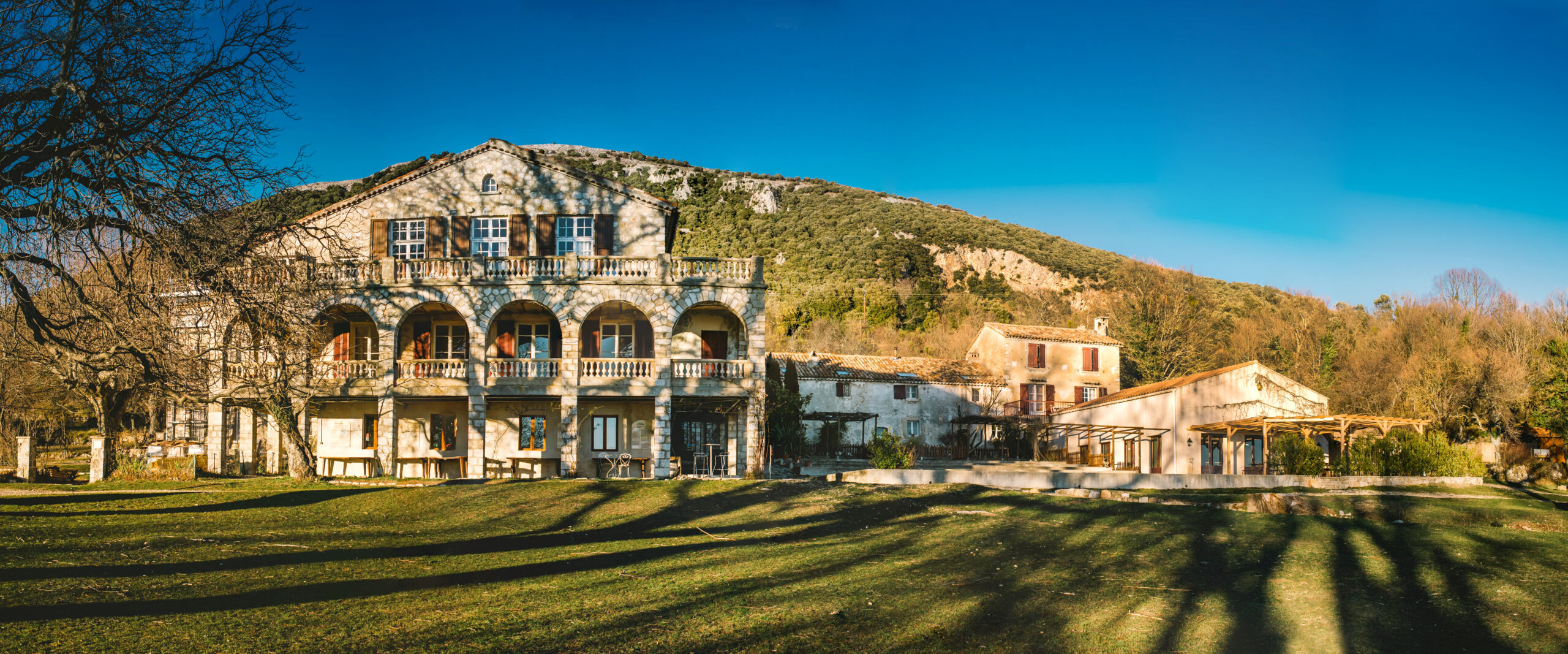
The Domaine des Courmettes, located in the Nice hinterland, provides favorable habitats for the Hermit (dry, short grasslands and stony soils). The Courmettes scientific team is monitoring several individuals of the species.
Photo : @ Ellen Teurlings