
Conservation of the Ocellated Lizard
One of Europe’s largest lizards is also an endangered species. A Rocha France has been helping to protect it for over 10 years through its research and conservation program. Find out about our work to protect the ocellated lizard and how you can get involved too!
A beautiful wild animal
The ocellated lizard is the largest lizard in Europe, reaching lengths of up to 70 cm! Its body is covered with pale green scales, marbled with black and dotted with blue ocelli on its sides. It is found only in southern France, Spain, and Portugal. It prefers arid, sunny areas with low vegetation. Its internal body temperature depends on the temperature of its environment, so it must constantly regulate it. To warm itself, the ocellated lizard uses the sun’s rays (heliothermy). This animal feeds mainly on insects, especially beetles, small arthropods, and fruit.
The ocellated lizard is fearful by nature, although it can also become accustomed to humans, which makes it difficult to observe. If it senses an intruder approaching, its first reaction is to flee to its burrow or a nearby shelter to hide. Sometimes, if it is taken by surprise and does not have time to hide, the ocellated lizard may choose to face its enemy, with its head raised and mouth open. Furthermore, it cannot dig its own burrow and therefore takes advantage of holes dug by other animals such as rabbits and hares. It is therefore dependent on hiding places left by others and often changes shelters for its safety.
An endangered species
The ocellated lizard is one of seven reptile species threatened with extinction in France. Its population is declining for several reasons:
- The use of pesticides on sheep also kills the beetles that the lizard feeds on.
- The decline in rabbit populations, which provide shelter (burrows) for lizards and keep vegetation low.
- The fragmentation and disappearance of the lizard’s habitat due to urbanization, reforestation, and the gradual abandonment of extensive grazing.
However, this animal is an insect predator and helps regulate insect populations. It is also prey for other species, and its disappearance could endanger them.
What A Rocha France does
Several populations of ocellated lizards are present in the Vallée des Baux and around the Courmettes estate. The A Rocha France team is involved in their conservation by contributing to the management of their habitat and through scientific studies. We initiated the first studies on the movement of ocellated lizards worldwide, equipping them with GPS tags.
Today, we continue to study its populations by conducting annual monitoring on the Courmettes estate. To do this, we use a protocol established as part of the national action plan for the species. This involves searching a grid several times in the spring over a short period to find and count the lizards present. This data allows us to better understand the spatial distribution of the lizards and contribute to national population monitoring.
In the Baux Valley, we monitor the population within the Ilon reserve as part of our reptile monitoring protocol and contribute to ad hoc studies on the species at various natural sites in the area. For example, we conducted a population census at the Tours de Castillon site in Paradou. We counted at least 12 different lizards, confirming the presence of a healthy population.
Let’s work together to protect the ocellated lizard
To help conserve the ocellated lizard, several actions can be taken:
- Preserve the insects it feeds on by reducing the use of pesticides.
- Keep dogs on a leash in natural areas.
- Preserve its habitats by limiting urbanization and combating the closure of environments (e.g., the spread of vegetation cover in so-called “open” areas of fields and steppes).
- Create artificial shelters to provide habitats in areas where most have been destroyed.
- Les dispositifs artificiels au service de la restauration et de la compensation écologique : de l’évaluation du risque de piège écologique aux recommandations de bonnes pratiques. Thèse de Timothée Schwartz, 2020.
- Les gîtes artificiels pour les Lézards ocellés (Timon lepidus) sont-ils une mesure compensatoire efficace ? Poster réalisé en 2023. Demander l’accès à : [email protected]
- Amélioration des connaissances des populations de Lézard ocellé (Timon lepidus) au sein des mosaïques agricoles du Parc Naturel Régional des Alpilles. Rapport de 2015.
For more info
Let's work together to protect the ocellated lizard!
La Vallée des Baux
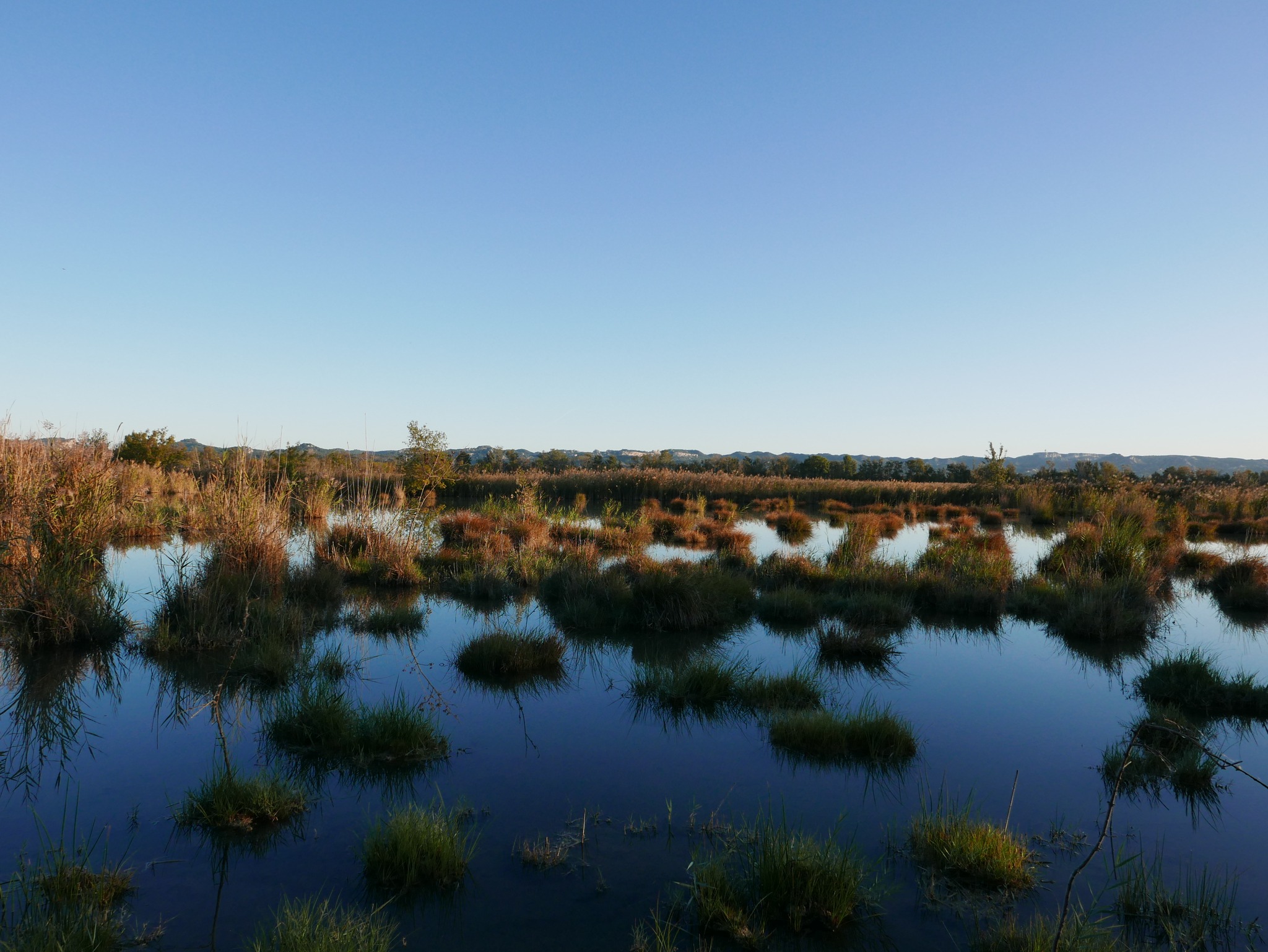
South of the Alpilles, the Vallées des Baux is home to one of the largest populations of rollers in France, with more than 30 pairs living across 2,000 hectares. Here, rollers find plenty of nesting sites and large insects to feed on!
Photo: @ Marie Pfund
Les Courmettes

The Domaine des Courmettes, located in the Nice hinterland, provides favorable habitats for the Hermit (dry, short grasslands and stony soils). The Courmettes scientific team is monitoring several individuals of the species.
Photo: @ Ellen Teurlings