
Bird migration is a recurring natural phenomenon. Every year, many species of birds undertake two migratory journeys: in spring, they travel to more northern regions to breed, and in autumn, they return to their winter quarters further south. Birds migrate mainly to find food and better breeding conditions. In winter, food can become scarce in colder regions. They therefore move to warmer areas. This behaviour increases their chances of survival and reproduction.
Bird migration in evolution
All over the world, changes in bird migration patterns are being observed. These changes are often linked to various environmental and biological factors, such as climate change, weather conditions and human activities. During migration, the physical condition of birds is important for successfully covering long distances. Birds depend on favourable weather conditions, such as wind strength, temperature and precipitation, to minimise their energy expenditure. Conversely, unfavourable weather conditions can increase energy costs, cause delays and even lead to death. Local weather conditions are particularly important at migratory stopover sites, where birds rest and replenish their energy reserves. Cold, wet weather or storms can reduce food availability and hinder recovery, compromising the continuation of migration.
Although global trends provide valuable information, migration timing and patterns can vary considerably between regions, populations and species. Local environmental conditions, food availability and habitat characteristics strongly influence how and when birds migrate. Changes in local weather conditions, partly due to climate change, can therefore have direct consequences for migratory birds. This highlights the importance of regional and long-term studies to better understand the factors that influence migration at the local level. One such study is being conducted by A Rocha France in the Vallée des Baux, a wetland area located in Provence in the Bouches-du-Rhône department.
Gaining a better understanding of the factors influencing migration at the local level
Depuis 2006, A Rocha France mène un programme de baguage d’oiseaux dans le marais de l’Ilon. Il s’agit d’une zone humide importante de la Vallée des Baux, qui fait partie du Parc Naturel Régional des Alpilles et dont une partie est classée réserve naturelle. Ce site abrite plus de 200 espèces d’oiseaux et recèle des habitats humides précieux. Grâce à son emplacement en Provence Alpes Côte d’Azur, proche du Rhône et de la Camargue, ce marais offre des sites de repos et d’alimentation aux oiseaux migrateurs, notamment aux hirondelles qui s’y rassemblent en grand nombre pour se ravitailler et passer la nuit pendant leur migration vers le sud.
Les données recueillies dans le cadre du programme de baguage permettent d’étudier les tendances en matière de calendrier de la migration automnale, l’état de santé des oiseaux au moment de leur capture et l’influence potentielle de facteurs environnementaux tels que le changement climatique.
L’objectif de cette étude est d’analyser les changements dans l’état de santé et la phénologie* des oiseaux capturés au cours de leur migration au cours des douze dernières années. Cette étude examine si des changements se produisent dans la phénologie de la migration des oiseaux et dans leur état de santé, et quels facteurs peuvent jouer un rôle pour expliquer ces changements.
Phenology is the study of the occurrence of periodic events (usually annual) in the living world, determined by seasonal variations in climate.
La migration, phase critique pour les oiseaux
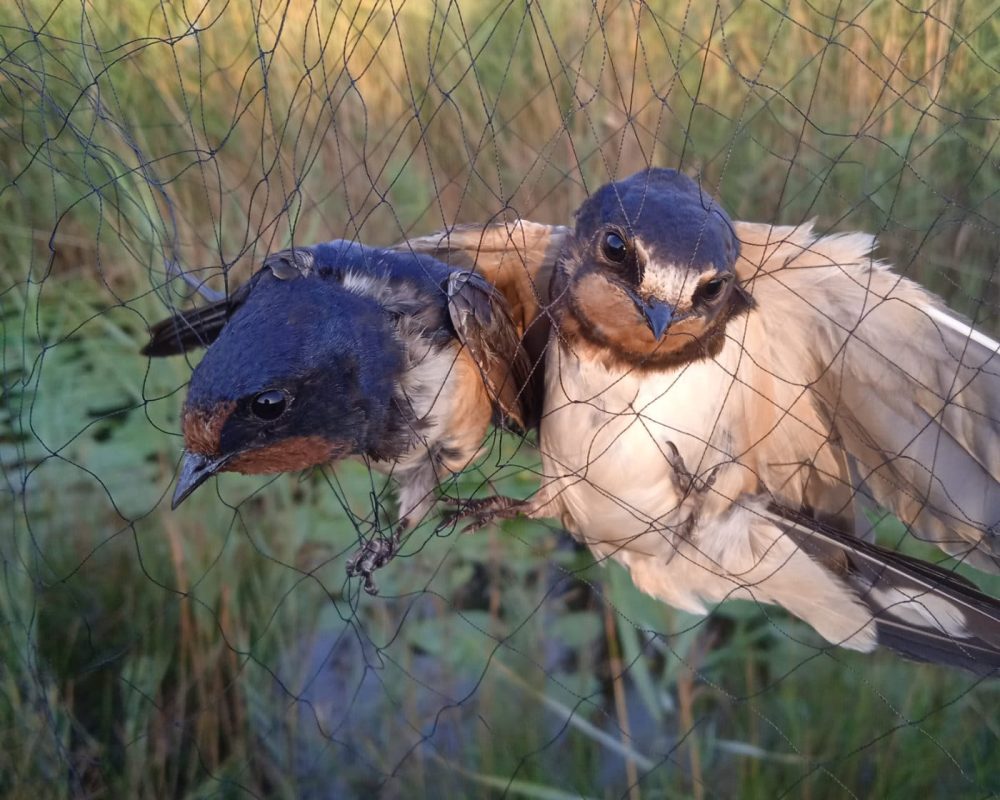
The results of the study show a clear correlation between meteorological variables and the physical condition of swallows. More specifically, temperature and wind had a negative effect on their physical condition, while atmospheric pressure had a positive effect. These results are concerning in the context of climate change, as rising temperatures are expected to be detrimental to the physical condition of migratory swallows during their journey. This deterioration in their physical condition could have an impact on their survival during migration and, consequently, on the conservation of populations across Europe.
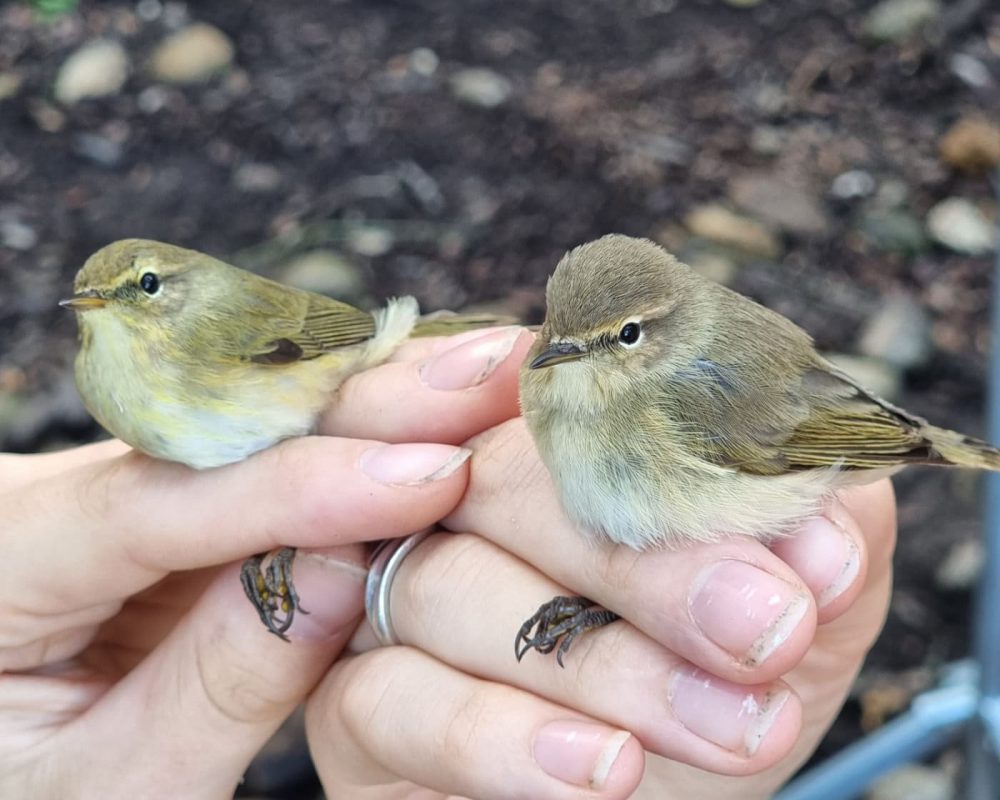
Analyses have revealed that species are arriving earlier and departing later in the season on average, suggesting that the migration period for these species is becoming longer. Looking at each species individually, only two show clear phenological changes. The robin and the common chiffchaff are arriving earlier and earlier in the season. For most other species, no significant changes have been observed in terms of arrival dates, departure dates or the dates on which the maximum number of individuals are observed.
The length of stay increased significantly only for the common flycatcher, suggesting a longer migration period for this species. For all other species, the length of stay did not change significantly during the study period.
A study to be continued and refined
Changes in bird migration patterns are already underway and well documented around the world. However, few studies have been conducted at the local level of a migratory stopover site. The Ilon Marsh is a site of international importance for the migration of barn swallows, but it also hosts many other migratory species. The phenological changes observed and the influence of meteorological factors on the health of swallows at the site level are important because they show that the climate changes described at the global level can have an impact at the local level on the ecosystem and, more directly, on species. In particular, it is questionable whether historic migratory stopover sites such as the Ilon Marsh will have sufficient environmental conditions to accommodate migratory birds in the future, or whether they will have to choose other sites, for example further north where temperatures are generally lower in late summer.
Recommendations for future research include conducting year-round monitoring, which would provide a better understanding of which species are present throughout the year and determine more precisely when species arrive at the study site. In addition, continuing this study over a longer period of time would provide a more robust dataset, capable of detecting changes for other species such as sand martins (Riparia riparia) and other migratory passerines.
Article based on Josina Catsburg’s internship report.